 |
The Development of Perceptual Expertise
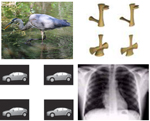
A major component of our current research asks how experts become experts. Do they perceive the world differently? Do they know more? Do they know different things? Do they use knowledge differently? Do they use certain knowledge more quickly? Or is there some combination of all of these? Our laboratory approaches these questions using behavioral experiments, cognitive neuroscience techniques, and computational modeling. In several comprehensive reviews, we have related research in object perception, object categorization, object memory, and perceptual expertise. |
 |
Temporal Dynamics of Object Categorization
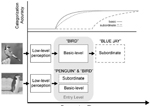
This project aims to unravel the temporal dynamics of object categorization, identification, and recognition and how those dynamics change with learning and expertise. |
 |
Model-based Cognitive Neuroscience Approach to Decision Making
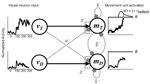
Stochastic accumulator models account for response time in perceptual decisions by assuming that perceptual evidence accumulates to a threshold. We developed hybrid neurocognitive models whereby the perceptual evidence for a decision is defined by the observed neurophysiology of one class of neurons which drives an accumulation of evidence thought to be instantiated by another class of neurons. Models are contrasted on their ability to account for the dynamics of observed behavior as well as the dynamics of recorded neurons. |
 |
Stochastic Models of Cognitive Control over Perceptual Decisions
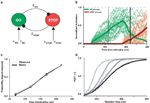
We link cognitive models of categorization, attention, and cognitive control with neurophysiological data. We formulated competing stochastic models of perceptual decisions and control over those decisions. These models are tested by fitting them to behavior of humans and macaque monkeys. The models are further evaluated by contrasting the accumulation of evidence in the models with the changing patterns of single unit neural activity recorded from awake behaving monkeys. One focus of this project has been stopping and stepping decisions to move the eyes to a target object in the visual display. |
 |
Bayesian Approaches to Cognitive Modeling
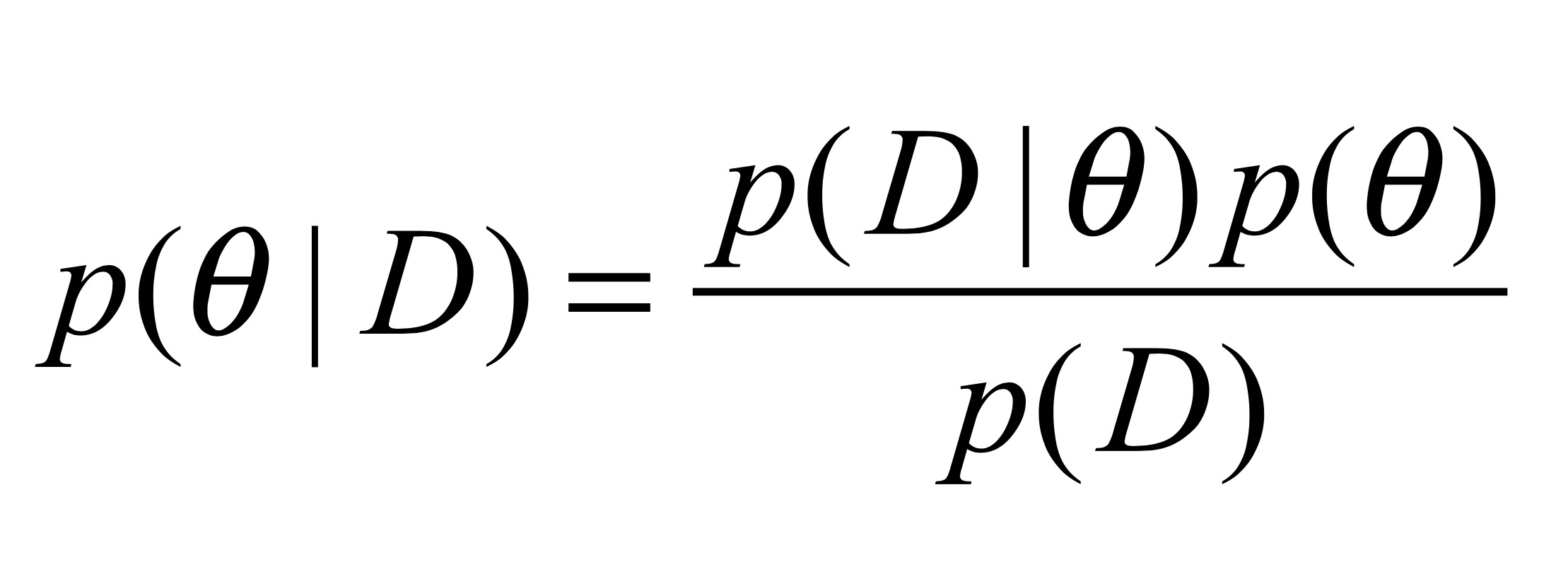
We have investigated Bayesian approaches to cognitive modeling, used Bayesian techniques for parameter estimation and model comparison, and used Bayesian hierarchical modeling to understand individual differences. |
SOME PAST RESEARCH PROJECTS
 |
What Makes Face Recognition Holistic?
This is a composite made from the top half of Tom Palmeri’s face and the bottom half of Tim Curran’s face. According to people with opinions they can’t keep to themselves, TimTom, as we like to call him, is far better looking than either Tom or Tim alone. Nor does he really look much like Tim or Tom. Some of our work tries to understand what makes face recognition holistic using a combination of behavioral experiments and computational models. |
 |
Modeling Face Recognition
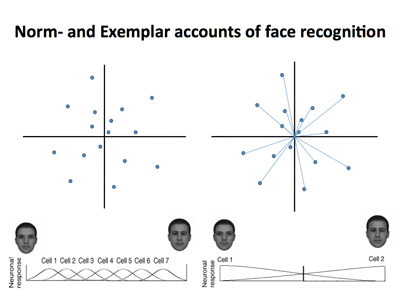
This project contrasts norm-based and exemplar-based models of face recognition. |
 |
How Category Learning Affects Object Representations
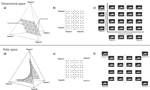
We are interested in the factors that influence how novel objects are perceptually represented as measured in behavioral experiments and by fMRI. We are particularly interested in how learning to categorize objects influences how those objected are represented. |
 |
EBRW Model of Perceptual Categorization
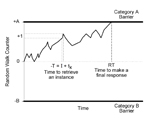
The Exemplar-Based Random Walk (EBRW) Model accounts for both the time and accuracy to categorize objects. It combines the well-knowledge generalized context model (GCM) of categorization (Nosofsky, 1986) and the Instance Theory of automaticity (Logan, 1988). Recent work in our laboratory has used the EBRW to account for the development of perceptual expertise in visual object recognition and categorization. |
 |
Does Statistical Learning Impact Category Learning?
Humans can acquire knowledge about the structure of their environment by mere exposure through statistical learning. While there is evidence that statistical learning occurs, evidence that it facilitates later learning is incomplete. In this project, we are investigating whether statistical learning of correlations between different dimensions of visual objects facilitates later learning to categorize those objects with feedback. |
 |
Naming and Remembering Objects
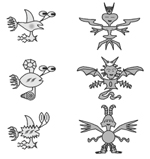
What’s in a name? This project examines how naming objects might influence the long-term visual representations of those objects in memory. |
 |
Interactions between Scene and Object Recognition
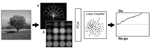
How does object perception influence scene perception? We combined a computational model of scene recognition based on global scene statistics (Oliva & Torralba, 2001) with a diffusion model of perceptual decision making (Ratcliff, 1978) to account for consistent-object advantages observed in ultrarapid scene categorization. The simulations suggest that the consistent-object advantage need not arise from ultrarapid object recognition influencing ultrarapid scene categorization, but from the inherent influence certain objects have on the global scene statistics diagnostic for scene categorization. |
 |
The Perceptual Reality of Synesthesia
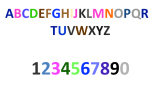
We studied individuals with lexical-chromatic synesthesia. For these individuals, achromatic words, letters, and digits give rise to reliable color percepts. In a series of studies, we demonstrated the perceptual reality of their synesthetic color experiences. |
 |
Rules and Exemplars in Object Categorization
This work examined the role of rules and exemplars in visual object categorization. Some of this work contrasted rule-based and exemplar-based models of object categorization, and other work examined their interaction over the course of learning. One hypothesis we’ve investigated is that people may sometimes categorize by using explicit rules but eventually use similarity to stored exemplars after extended learning. This earlier work informs our current research on the development of perceptual expertise. |
 |
Memory Systems for Recognition and Categorization
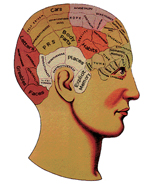
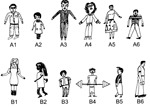
This work contrasted single-system models of object categorization and visual memory for objects with multiple memory systems models. In critical reviews and experiments, we noted significant limitations in the evidence for multiple memory systems models, specifically in reported neuropsychological dissociations between categorization and recognition memory. Different brain areas are unquestionably involved in different kinds of object representation and object processing, but are probably not so well aligned with the different kinds of tasks we can perform with objects, such as categorizing or remembering them. |
 |
The Role of Background Knowledge in Object Categorization
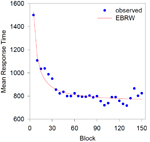
This research examined the temporal dynamics of how background knowledge and causal theories influence object categorization. Contrary to some accounts, we found that background knowledge can have a significant impact on object categorization, even when those categorizations are forced to be made extremely quickly. |
 |
The Development of Automaticity in Object Categorization
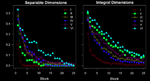
What happens as people become automatic at categorizing objects? When people first categorize objects, they might use explicit rules. But categorizing automatically seems like a qualitatively different kind of decision. Behavioral experiments and computational modeling were used to understand how people develop automaticity in object categorization. |
 |
How do People Learn Novel Object Categories?
This line of research contrasted different theories of how people learn novel object categories. These include models that assume that people abstract category prototypes, that people abstract simple category rules, or that people remember particular category exemplars. Models were contrasted on their quantitative accounts of observed rates of category learning as well as their qualitative predictions of the difficulty of learning certain categorization problems or categorizing certain category exemplars. |
 |
Perceptual Details in Memory for Spoken Words
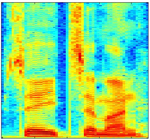
This research found evidence that perceptual details of the voice of a speaker were encoded in long-term memory representations for spoken words. Leading theories at the time suggested that voice attributes were normalized out during speech recognition, which meant that details of the voice of the speaker would be absent from any long-term memory representations of spoken words. We instead found evidence that words are better recognized when they are spoken by the same speaker, which meant that long-term memory representations contain perceptual details. |